Sligger mutagenesis
Secret InvasionSligger mutagenesis is the suspected chain of genetic change behind the Sliggers: an unknown substance leaked from the Wrecker Island Nazi U-boat into the ocean, entered marine life, and may have reshaped organisms over generations. The process is never conclusively identified in the available evidence, but its consequences reach beyond the monsters themselves. Their changing biology, their dispersal through coastal waters, and the risk that contaminated remains could carry mutated DNA through the food chain turn the outbreak into an ecological problem as well as a series of attacks.
Suspected Origin and Unresolved Cause
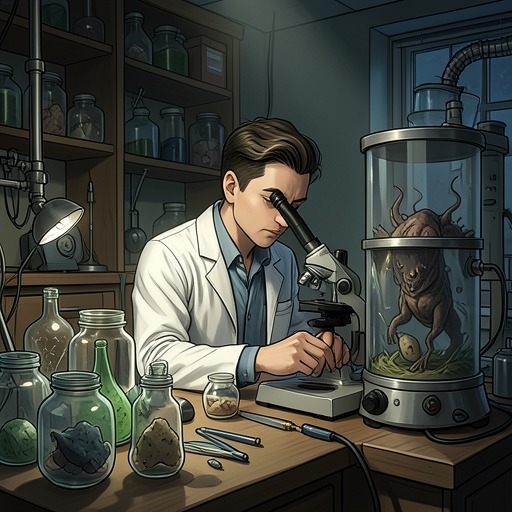
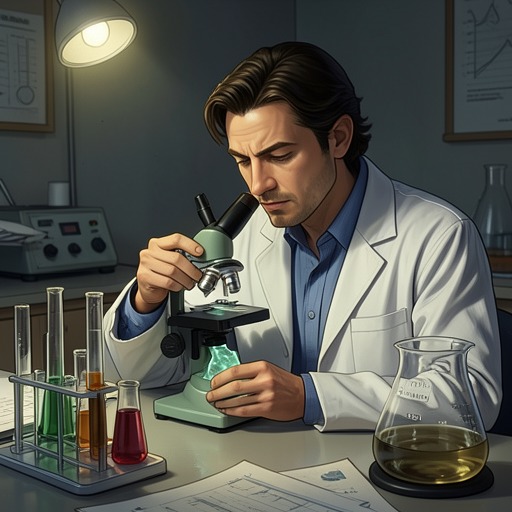
The proposed origin lies in the Nazi experiments associated with the old submarine stranded beneath Wrecker Island. After the creatures were destroyed, the toxic element that had leaked from the vessel was cleaned up, but the substance itself remained a scientific mystery. Denise Baddington, the marine biologist stationed in Sweetboro by the U.S. Fish and Wildlife Service, had samples of the tainted water and residue recovered from the submarine. She also had a few dead Sligger specimens to examine. Her tissue analysis, however, had yielded no conclusive identification of what the creatures were, and laboratory results on the residue were still pending.
Mason Parker described the suspected history to officials as strange experimental material, possibly connected to genetic mutation or biological warfare, that had leaked into the ocean many years earlier. Denise developed the mechanism more specifically: she suspected that the German and Japanese scientists had created a substance intended to induce genetic mutation when introduced into an organism’s DNA. In her account, the Sliggers’ mixed traits could have arisen as generations consumed other marine species and mutated with DNA from their prey. This was an explanation that could account for their biology, not a confirmed laboratory finding; the substance had not yet been identified, and the tissue analysis had not resolved their origin.
Ron Tully considered Denise’s theory viable. His knowledge of Nazi-era genetic experimentation made biological warfare a plausible context for the submarine’s contents, but it did not establish what the scientists had made or how the creatures developed. The distinction matters: the narrative offers a strong causal hypothesis, while keeping the chemical and genetic evidence incomplete. The monsters are visible proof of a transformation, but the initiating compound remains unnamed and unverified.
A Composite and Changing Organism
The Sliggers’ bodies give the mutagenesis theory its most immediate form. They stand about five feet tall, with olive-green skin, long reptilian tails, thick amphibious legs, and webbed feet. Each has three pairs of tentacles, roughly four feet long, tipped with venomous claws. Their man-sized heads carry protruding snouts, lower jaws extending beyond the upper, needle-like teeth, and large, bulbous black eyes. The combination of marine, amphibious, and reptilian characteristics is consistent with Denise’s account of organisms acquiring traits through generations of exposure and consumption, although appearance alone cannot demonstrate the proposed genetic mechanism.
The process is also presented as potentially ongoing rather than as a single past mutation. Later, when Denise finds that Sligger flesh is denser than tissue she has cut from other dead specimens, Andy Carlyle suggests that successive generations may adapt to their environments. He points to the creatures’ movement out of the water and raises the possibility that they are becoming tougher and more resistant. Josh Moody’s response registers the practical stakes: they had already been difficult to kill. The explanation remains a possibility, not a settled result, but it changes the threat from a fixed biological puzzle into one that may become harder to contain as conditions change.
From Mutation to Ecological Spread
The suspected mutation connects the submarine’s contamination to a wider chain of consequences. Denise warns that reports from Georgia and St. Augustine, Florida, are too geographically distant to be explained by one local nest. She concludes that there must be multiple nests, eggs, and creatures along the coast, and fears that further attacks will reveal their locations only after people have been exposed to danger. The outbreaks therefore suggest a distributed population, not a single group confined to Wrecker Island.
Later, investigators conclude that coastal currents have carried the creatures along the Gulf of Mexico, moving east from somewhere farther west. At that point, Port Arthur, Texas, on the Texas-Louisiana border, is the furthest-west location where Sliggers have been reported. This evidence gives the crisis a waterborne geography: currents connect distant coastal sites and help explain how the infestation can extend beyond the original island. It does not establish that currents are the only means of spread, but it places them at the center of the characters’ working account.
The food chain makes the danger harder to separate from the creatures’ movement. Mason cautions that simply blowing up Sliggers could scatter mutated DNA into the water. Other animals might eat the tissue, restarting the cycle. Denise gives the same concern an operational form: every recoverable piece of tissue must be collected, and carcasses must be burned cleanly so scavengers cannot feed on remains containing mutated DNA. Under this model, killing a Sligger without controlling its remains could leave the biological hazard in circulation.
Containment and the Limits of Eradication
The mutagenesis theory shapes the response from nest searches to carcass disposal. Mason advises that nests are the priority because the creatures favor dark, wet places: shaded thickets, seaside caves, and sites where currents will not disturb them. The objective is to destroy both nests and the Sliggers associated with them, while avoiding a method that disperses contaminated tissue. Denise presses the need for clean collection and burning; Ron promises that the warning will be passed on to law enforcement. Extermination, in this account, requires attention to what happens after a creature dies.
When the Wrecker Island mission succeeds, the creatures and their eggs are destroyed, their carcasses properly disposed of, and the leaking toxic element cleaned up by the EPA to restore the island’s ecosystem. Those measures address the known local source and prevent an avoidable route of further contamination, but the later outbreaks show that the island operation has not ended the wider danger. Evidence of multiple nests and coastal movement requires a much larger response.
By the later search along the Mississippi, the response includes clean extermination as an explicit condition of success. Ron’s assessment records that the Sliggers can reproduce asexually and evolve rapidly to adapt to different environments; it also notes that the creatures found were destroyed without leaving remains that could contaminate the ecosystem and mutate its animals. After a nest near Baton Rouge is eliminated, searchers cover forty more miles of waterways without finding another monster, and the team reaches St. Francisville convinced that the spread north has been stopped. The report offers grounds for cautious confidence, not proof that the original compound’s full effects are understood. Sligger mutagenesis thus remains both an explanation for the outbreak and the reason a clean kill, a destroyed nest, and a recovered carcass carry consequences beyond the immediate fight.